

Patty Kline used to be against the idea of “meeting people where they are.” Behavior like illicit drug use had to have consequences, she thought. If something was given to her, she wanted to know what she was expected to do in return. If she was offered help, she wanted to know why.
It was only years later that Patty realized that compassionate, nonjudgmental care is the reason she’s still alive today—and in recovery.
“The crazy thing is, if they [staff] don’t force me to follow the rules, I automatically do. I do it for myself,” says Patty, 58.
Patty was in her early 20s when a doctor prescribed her Oxycontin to help with the pain of fibromyalgia. She had a good job as a chemical research technician and her prescription was covered by insurance, so why not? It helped her deal with unresolved childhood trauma and took away the discomfort caused by her chronic condition. When Patty’s mother died a few years later, her physician upped her dosage.
“It’s a 12-hour medicine, but they bumped me up to three times a day,” she says. “It was a reputable doctor… They didn’t think prescription drugs were a big thing.”
Feeling unstable, she sought advice from a psychiatrist, who prescribed Xanax and antidepressants. She soon found herself unable to keep appointments or hold a job.
“I lost my home, I lost my career, I lost everything,” she says. “Most of all, I lost myself.”
She checked into rehab. It was the late 1990s. After two weeks, the rehab staff told her she was cured. After all, it was just prescription medications.
Patty begged for more time and received two more weeks of care, but that too “definitely wasn’t enough,” she recalls. Once released, she was afraid to leave the house. She had two daughters with a man she met in rehab, who also introduced her to cocaine. She’s considered death by suicide more than once and had at least one overdose that could have been deadly without intervention.
Drugs had “wiped away my whole identity,” she says. “I didn’t know what I liked to eat. I didn’t know my favorite colors. I didn’t know anything about myself.”
Patty moved into Philly Home at Girard—a low-barrier, safe-haven shelter operated in partnership between Prevention Point Philadelphia (PPP), the City of Philadelphia, and Project HOME—and started utilizing PPP’s services there about a year ago. She finally had a roof over her head, a place to charge her phone, and wraparound care that is enabling her to rediscover parts of herself she thought were gone.
Patty says that the PPP nursing team has “helped with any and all of my medical needs. Especially when things popped up unexpectedly, like my fibromyalgia.” In terms of her recovery, methadone had failed her in the past, but Suboxone helped a lot and she is now gradually tapering down on it. With staff support, she has received an ID card and disability benefits. She’s looking for housing. She’s tried whatever type of therapy is offered through PPP and Philly Home at Girard, including art workshops with local artist Lisa Kelley and music therapy.
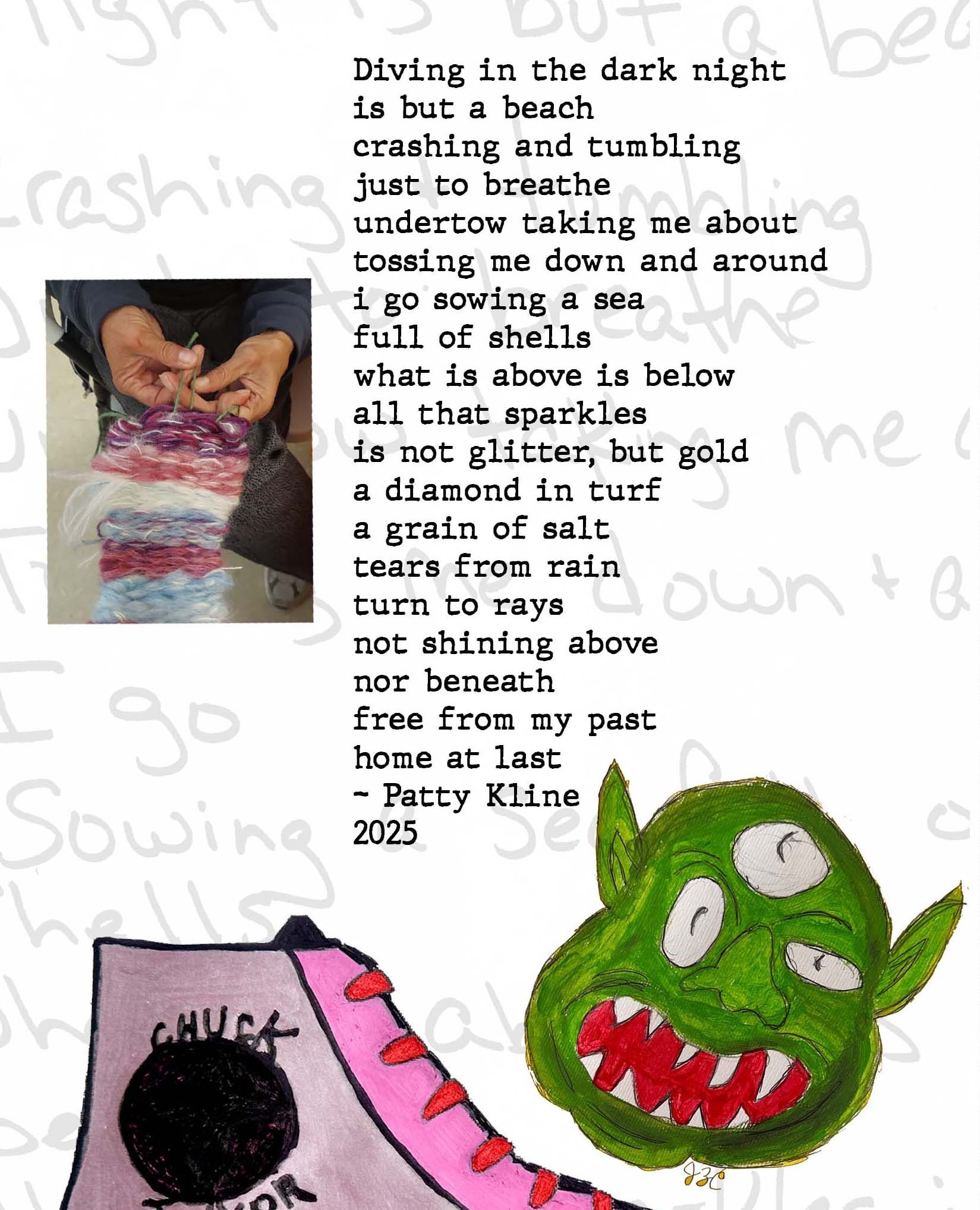
“I even wrote a poem,” she says. “I didn’t think I had any creativity in me at all.”
Patty says she’s always had trouble trusting people, but “the people here, I actually get the feeling that they really do care.” She feels PPP staff are trauma-informed, and that makes a difference in how they treat clients.
“When you’ve been through something, normal life just doesn’t come back like that,” she says.
Patty’s looking ahead to a time when she can be the one helping people.
“I was a whole wreck when I came in here,” she says. “I’ve gained stability, which is great. This place is like magic.”